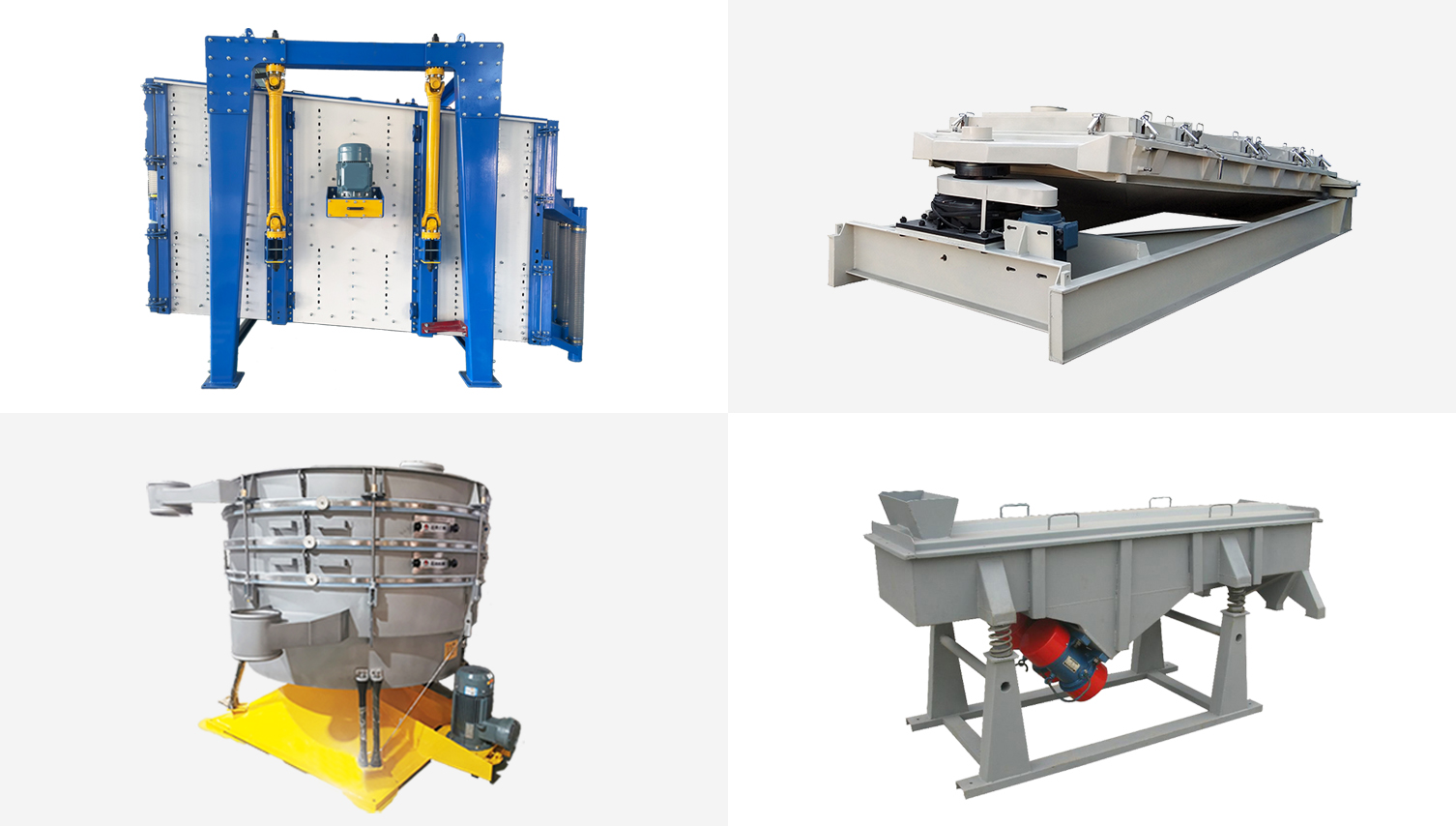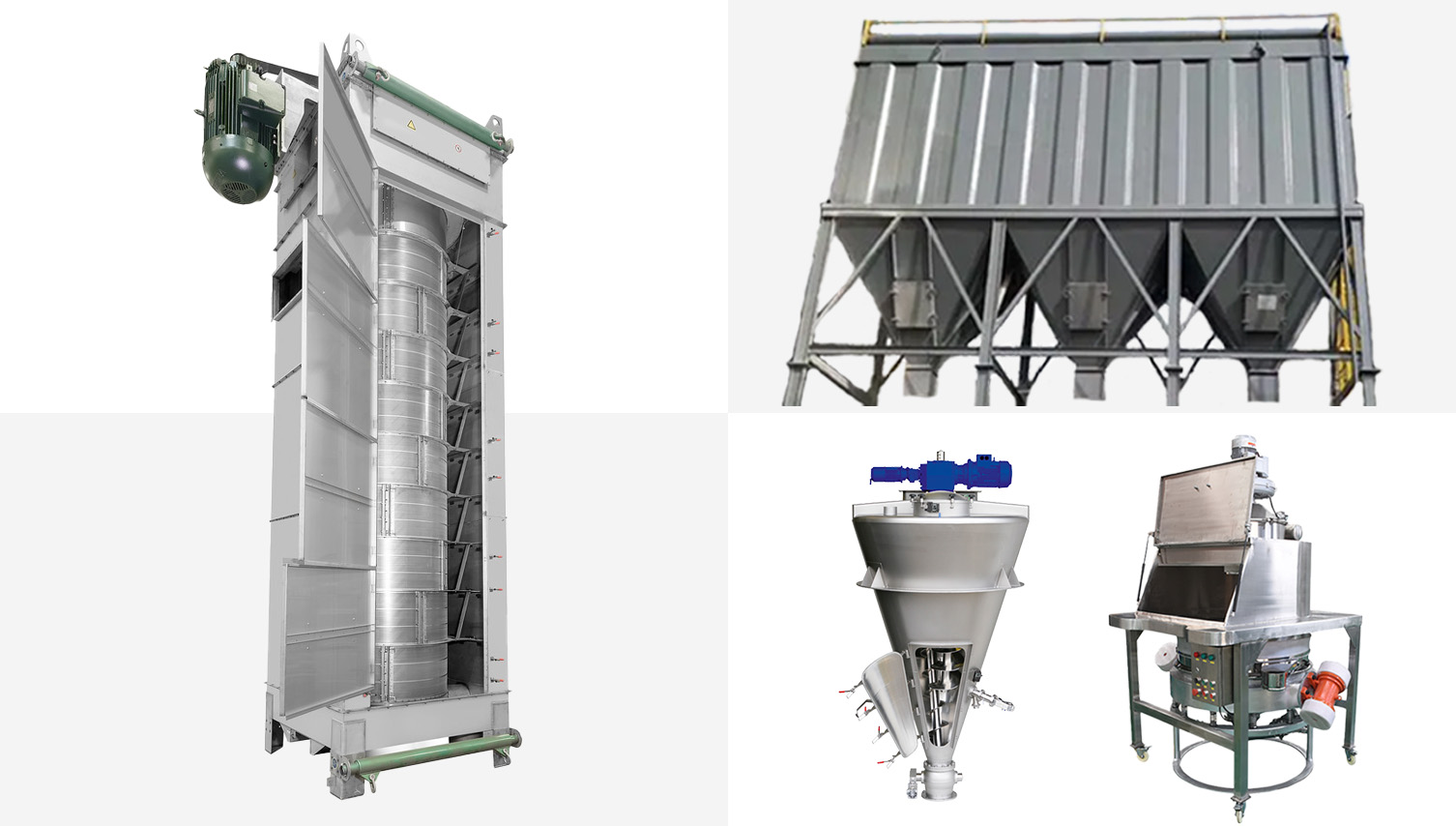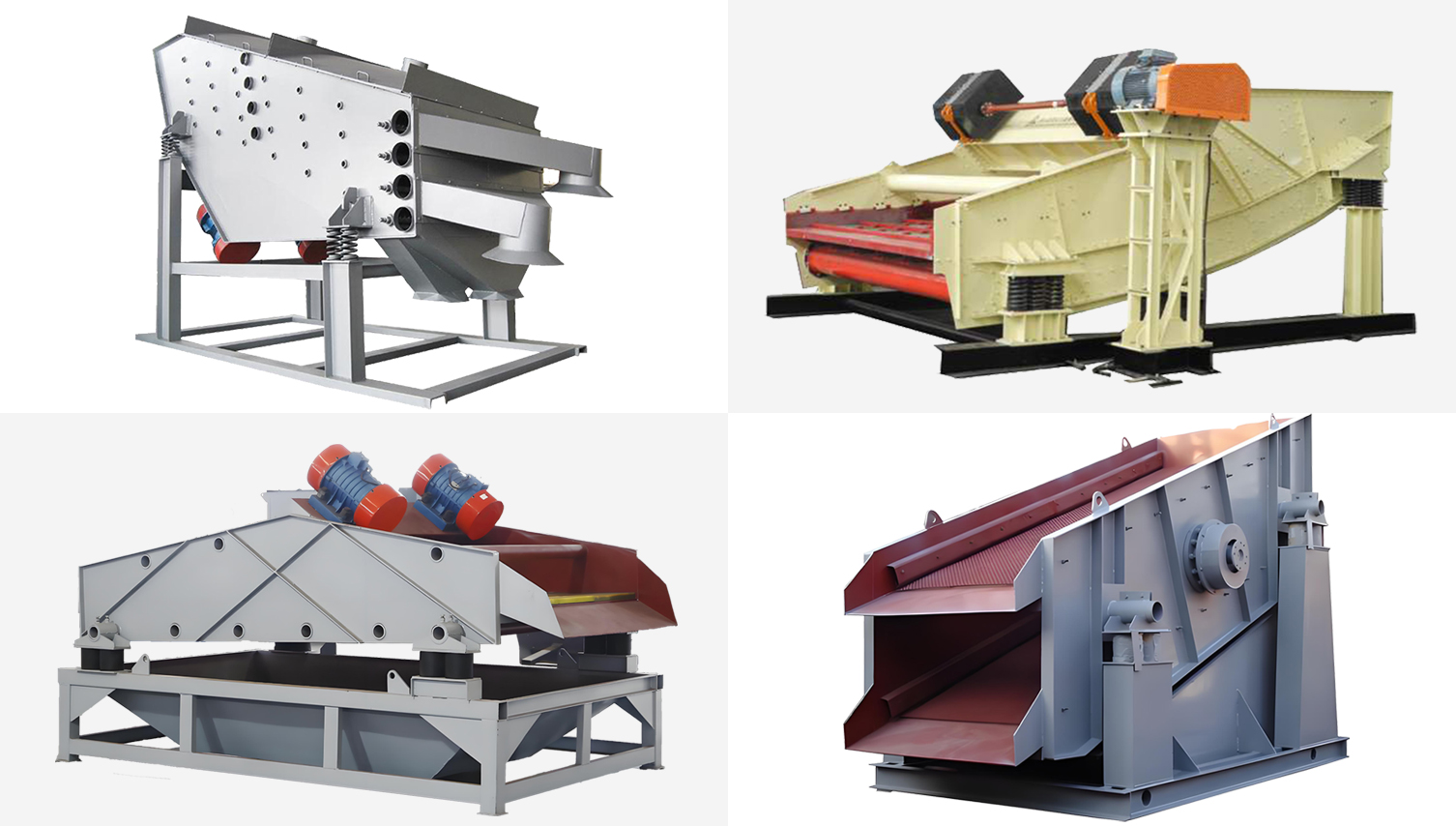
Low screening efficiency is one of the most common pain points in screening production lines, manifested as a large number of qualified particles mixed in the undersize material or excessive fine material carried over the oversize material. Traditional vibrating screens rely on high-frequency linear or circular vibration, which has limited capacity for handling sticky, wet materials, flaky particles, and materials with a low specific gravity. Square gyratory screens, however, employ a low-frequency gyratory motion that mimics manual screening, fundamentally changing the movement of materials on the screen surface.
Features of Square Gyratory Screens
The core features of square gyratory screens are "low frequency, large amplitude, and three-dimensional gyratory." It mimics the reciprocating motion of manual screening, with the screen surface performing a near-planar gyratory motion, accompanied by slight tilting and bouncing. This motion causes the material to move forward in a spiral pattern on the screen surface, greatly increasing the probability of contact with the screen openings. Furthermore, the square structure allows for high utilization of the screening area, enabling multi-layer stacking and making it suitable for fine grading.
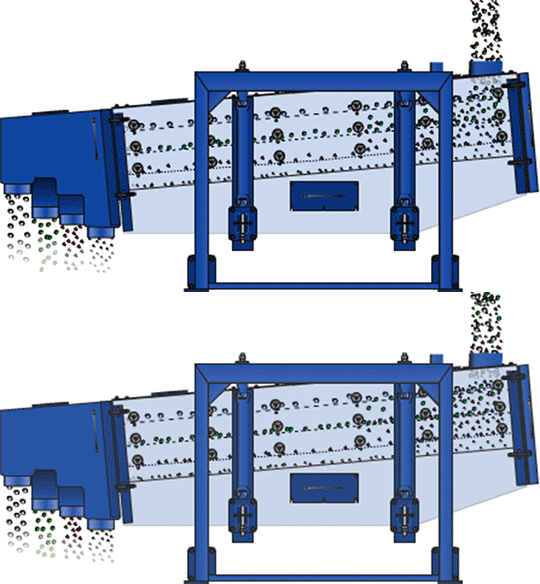
Working Principle
The square gyratory screen is driven by a motor via belt to rotate an eccentric drive shaft. Counterweights at both ends of the drive shaft cause the screen box to reciprocate horizontally. Simultaneously, there is a slight vertical up-and-down movement, creating a three-dimensional oscillating trajectory. After entering through the feed inlet, the material is subjected to the combined effects of tangential projectile force and gyratory force on the screen surface, spreading evenly and passing through in layers. Each screen layer independently completes screening; fine particles quickly pass through the mesh, while coarse particles are discharged from the end.
How to Solve Low Screening Efficiency
To address the problem of low screening efficiency, the square gyratory screen improves efficiency in the following ways:
1. Reducing Material Movement Speed: In traditional vibrating screens, material movement is too fast, and fine particles are thrown out before they can pass through the screen. The square gyratory screen has an adjustable movement speed (typically 0.3-0.5 m/s), extending the residence time of the material on the screen surface and increasing the chance of passage.
2. Preventing Screen Clogging: The slight bouncing generated by the gyratory motion effectively shakes off particles stuck in the screen holes, especially effective for materials close to the screen hole size.
3. Uniform Material Distribution: The wide and long screen surface of the gyratory screen naturally forms a uniform material layer, avoiding localized excessive thickness or segregation, thus improving overall screening efficiency.
4. Adaptability to Various Materials: For high-moisture and high-viscosity materials, the shaking frequency and amplitude can be adjusted to prevent material from clumping together.
The square gyratory screen, with its unique low-frequency gyratory principle, overturns the traditional "fast and intense" screening mode of vibrating screens, instead adopting a "slow and uniform" biomimetic motion, significantly improving the screening efficiency of difficult-to-screen materials. For users seeking fine grading and high yield, understanding and effectively utilizing this principle is the fundamental solution to the problem of low screening efficiency.
Clearly Separated Particles, Intelligent Screening -- Mirant Xinxiang Machinery Equipment Co., Ltd.