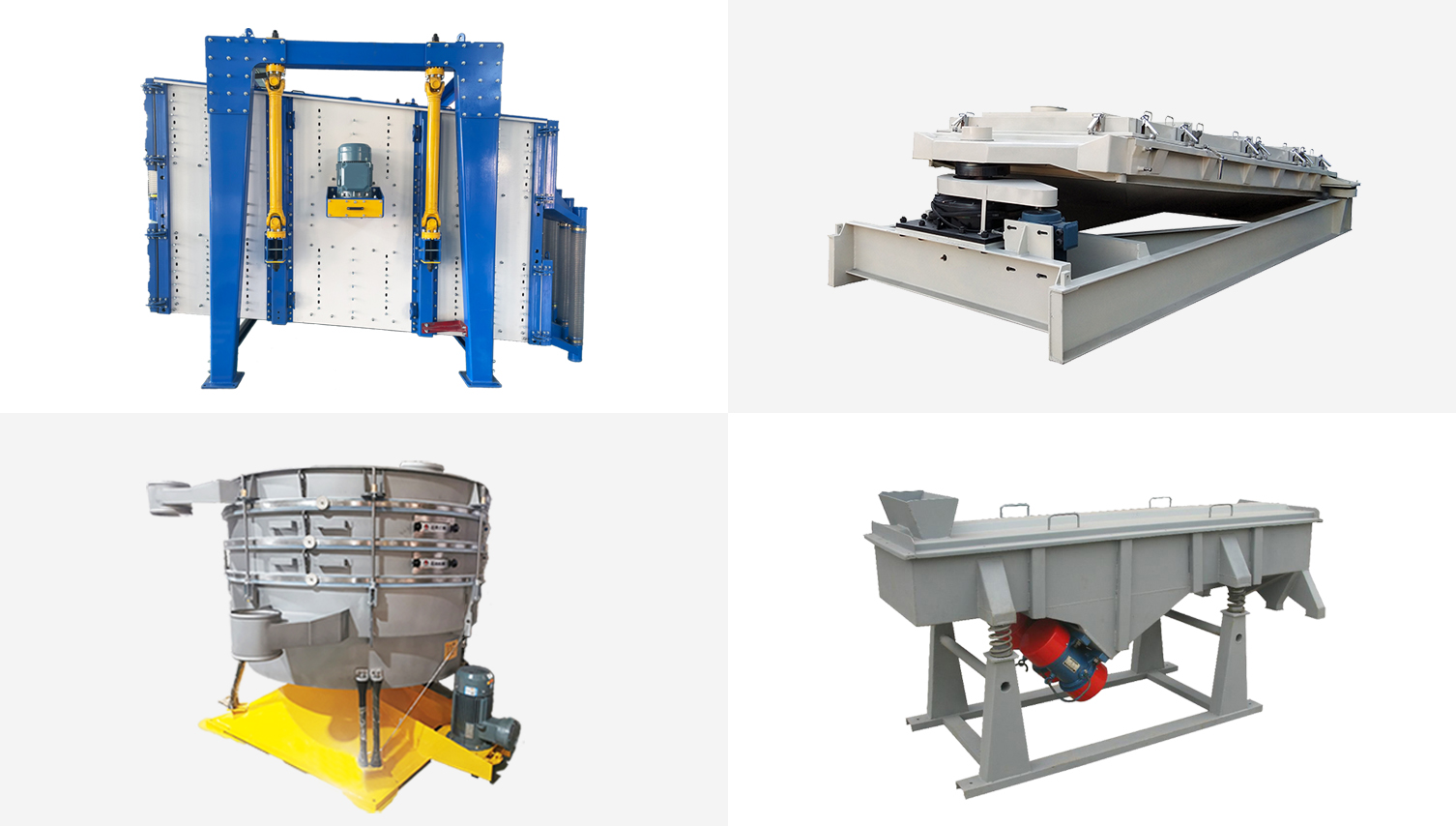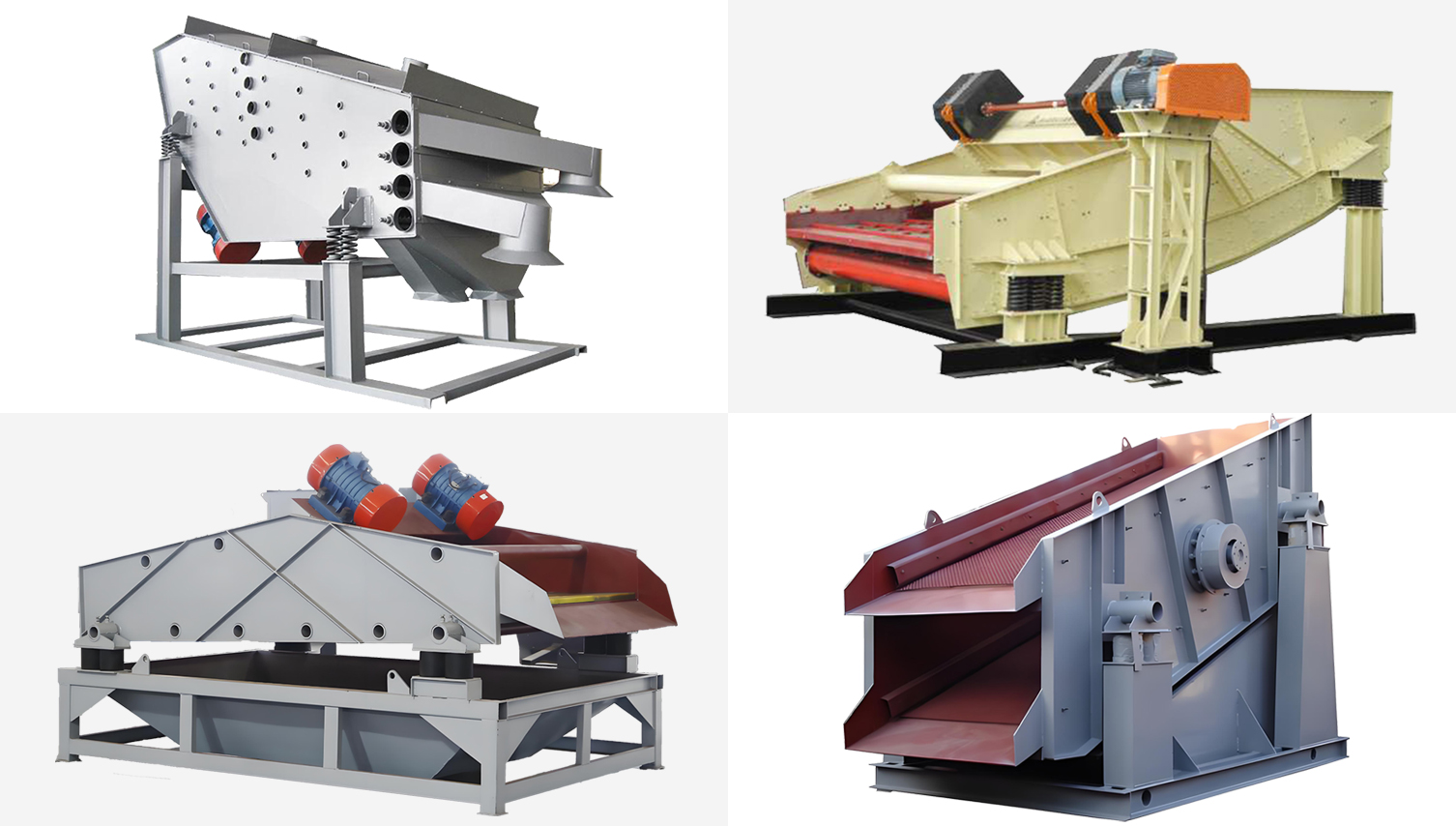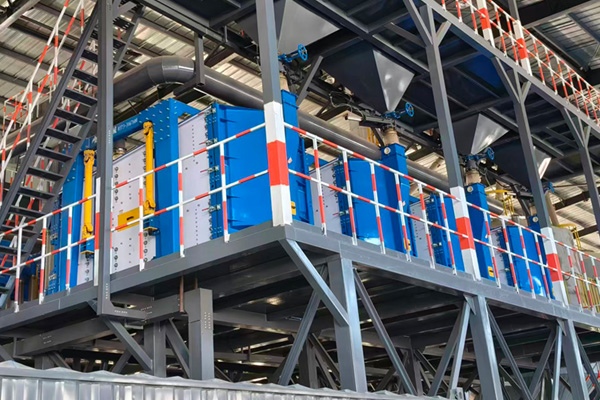
The core advantage of a square gyratory screen lies in its low-frequency, high-amplitude gyratory motion. However, improper parameter settings can exacerbate clogging. If the amplitude is too small, the material cannot gain enough kinetic energy to bounce off the screen openings; if the amplitude is too large, the material jumps too high, reducing the screening rate and potentially causing sharp particles to wedge into the openings. Finding the optimal kinematic window is key to solving the problem.
Detailed Measures:
1. Employ a stepped frequency adjustment strategy:
- Feed end (approximately 30% of the screen surface length): Set a higher frequency (400-500 rpm) and a medium amplitude to quickly disperse the material and achieve stratification.
- Middle section: Reduce the frequency to 300-400 rpm, keeping the amplitude stable, allowing particles close to the screen openings ample opportunity to pass through.
- Discharge end: Further reduce the frequency to 200-300 rpm, while decreasing the amplitude, creating a "kneading" effect to gently squeeze out particles already stuck at the edge of the openings rather than pushing them deeper.
2. Set a Reasonable Vibration Angle:
- Traditionally, it's believed that the vibration angle of a gyratory screen should be perpendicular to the screen surface. However, this isn't optimal for easily clogging materials. Adjusting the angle to 30°-45° (relative to the screen surface) allows the material to simultaneously receive forward projectile force and upward bouncing force. The upward component helps dislodge stuck particles, while the forward component prevents material from lingering in one area and becoming compacted.
3. Introduce a Variable Frequency Control System:
- Installing a frequency converter allows for real-time adjustment of the motor speed without stopping the machine. Operators can fine-tune the frequency based on the real-time performance of the material on the screen (e.g., continuous clogging or reduced undersize material), adjusting by 5-10 Hz each time, observing for 30 seconds to evaluate the effect. This function is particularly useful for processing materials with fluctuating batch composition (e.g., recycled materials, mixed materials).
The motion parameters of a square gyratory screen are not static rules but should be dynamically optimized based on material characteristics and screening stages. Remember one principle: let the material "roll" and "jump lightly," avoiding "slamming" and "static pressure." By setting different motion intensities for different screen sections, adjusting the vibration direction angle appropriately, and configuring frequency converter control, you can transform a gyratory screen into an adaptive anti-clogging system. This requires some experimentation and patience, but once the optimal parameter combination is found, the equipment will demonstrate actual processing capacity far exceeding its nominal value.
Clearly separated particles, intelligent screening – Mirant Xinxiang Machinery Equipment Co., Ltd.