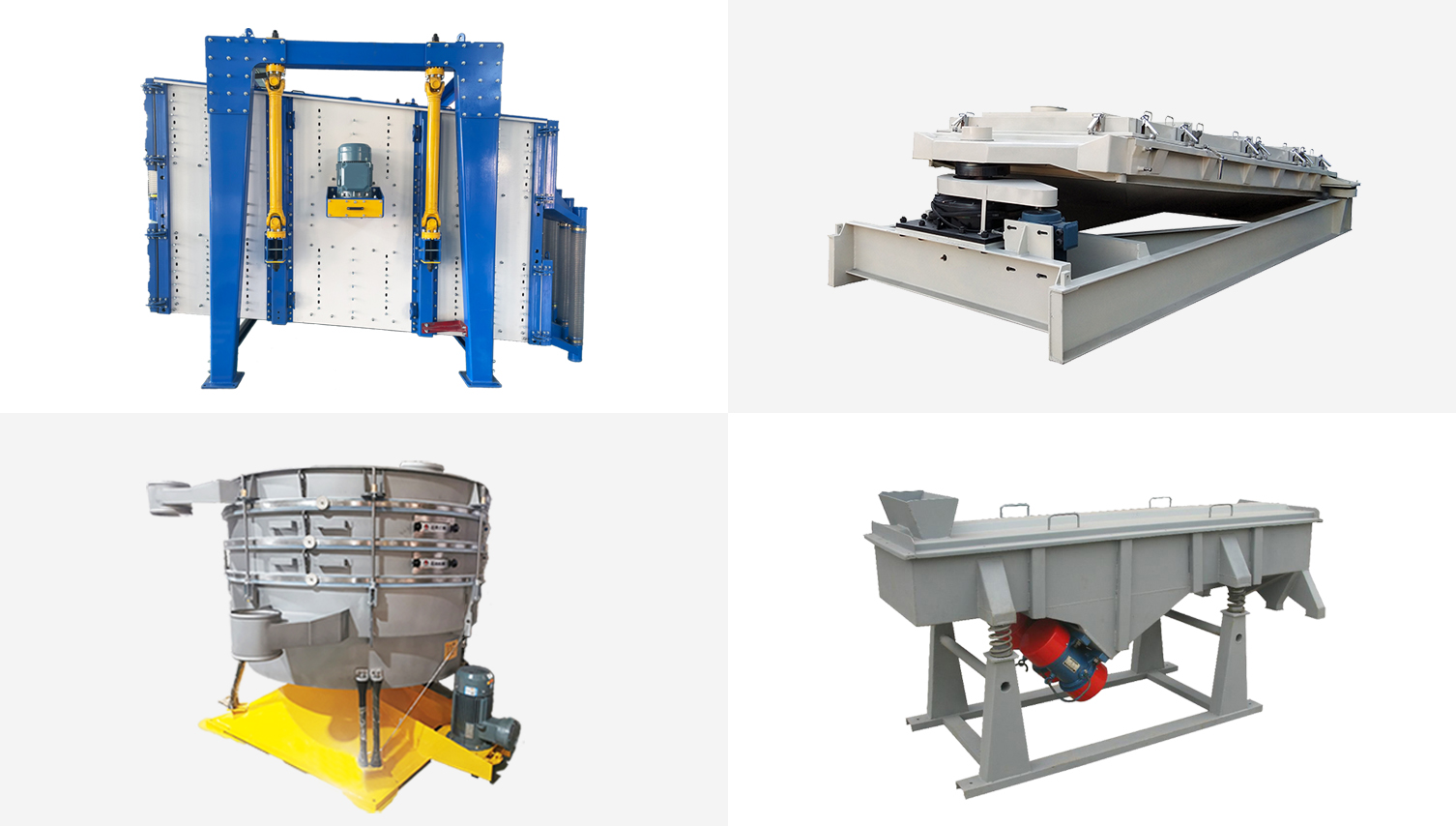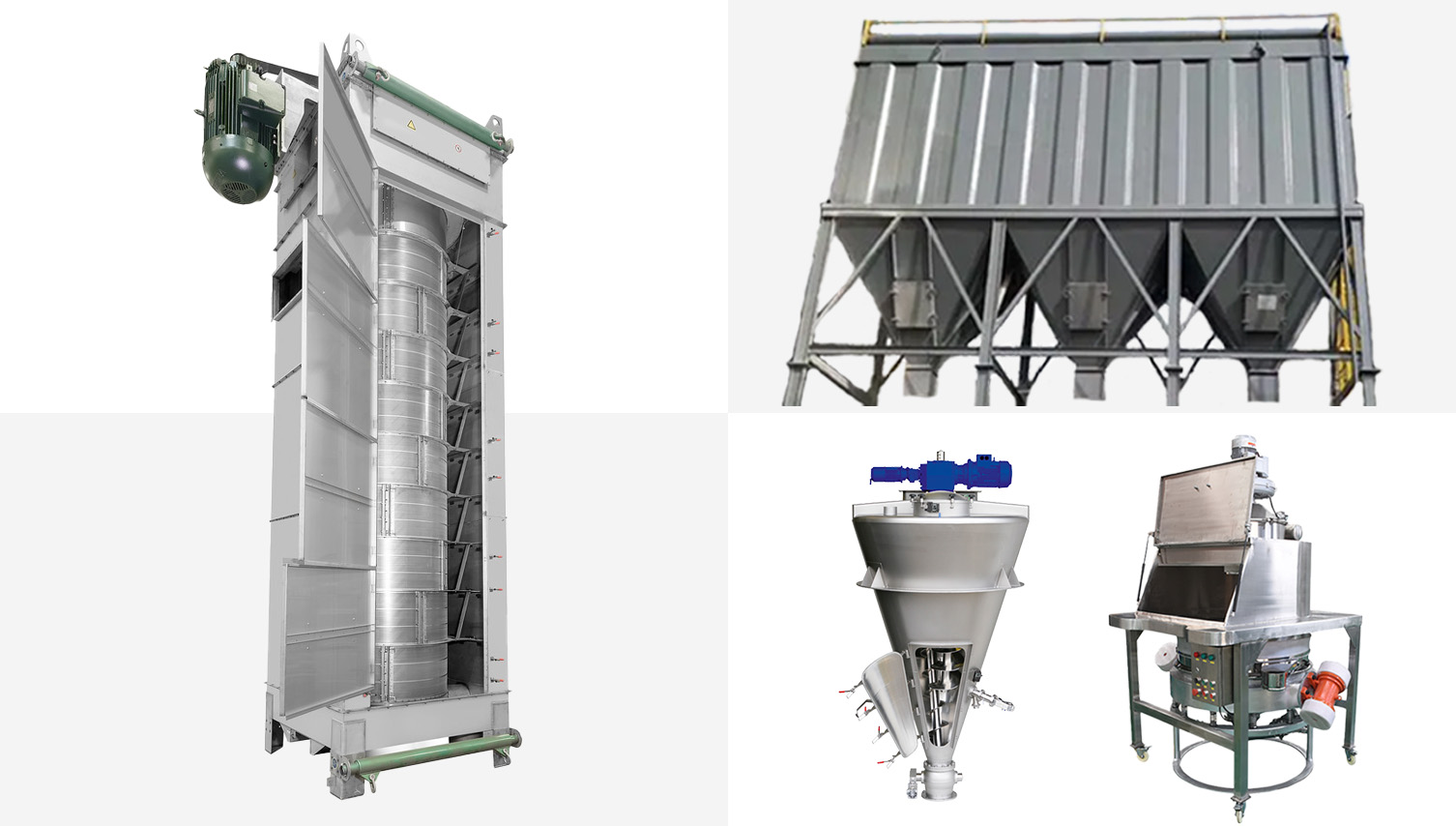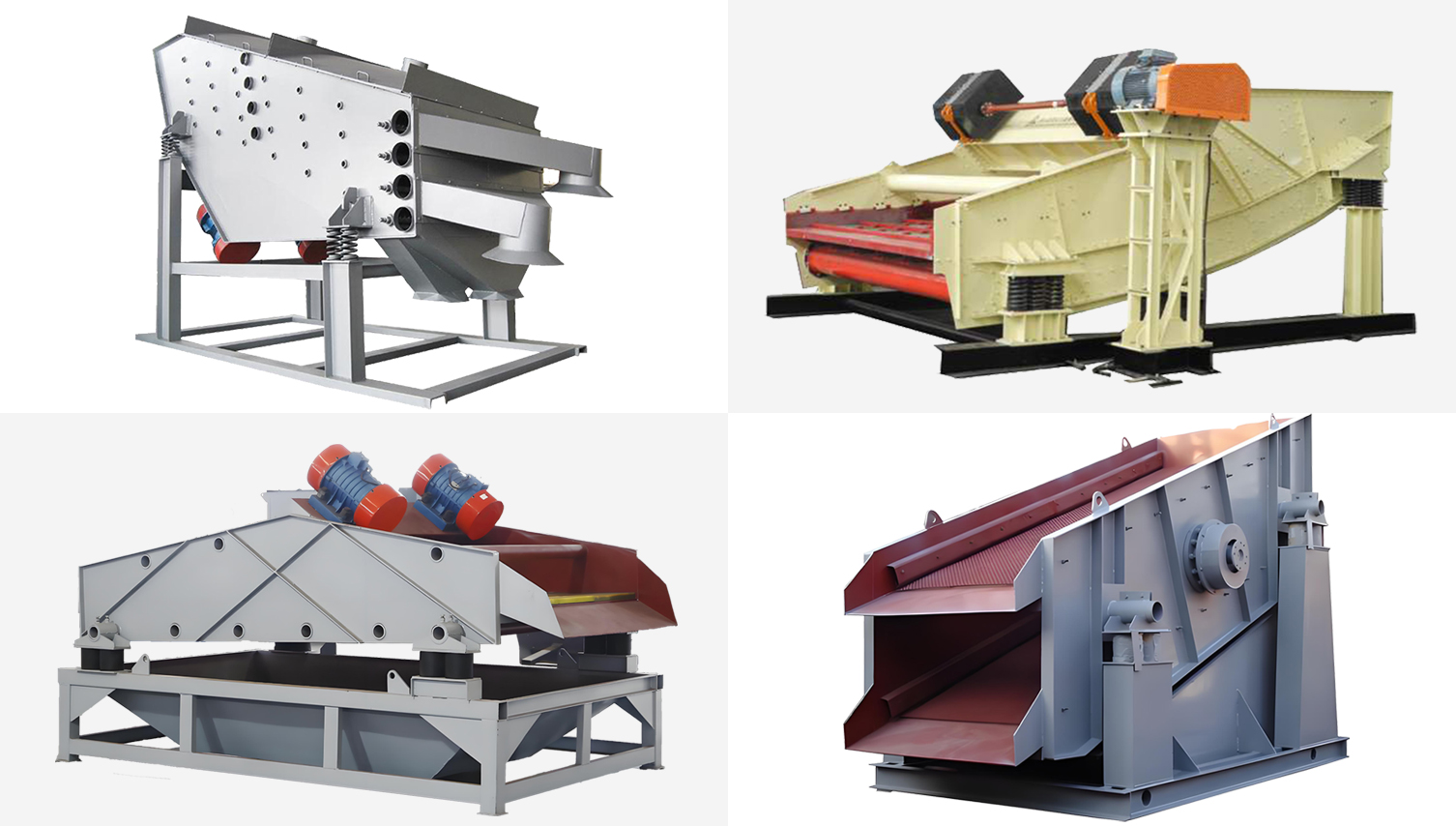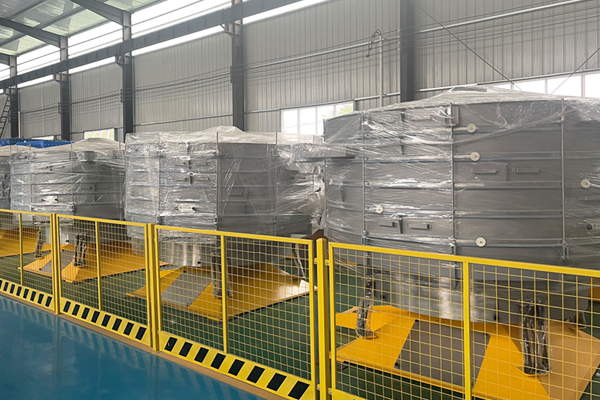
In conventional screening production lines, traditional screening equipment commonly suffers from problems such as insufficient screening accuracy, mixed particle grading, and leakage of fine materials, becoming a core bottleneck restricting the quality upgrade of the production line. Most traditional screening machines use a high-frequency, high-amplitude vibration mode, relying on violent vibration to achieve material passage. This rigid screening method easily causes disordered material movement, incomplete stratification, and the accumulation of coarse and fine particles, ultimately leading to a low finished product qualification rate. Upgrading the production line to a circular gyratory screen can completely solve the accuracy defects of traditional screening from the operational principle level, achieving refined and standardized screening operations.
The core advantage of the circular gyratory screen stems from its unique three-dimensional composite gyratory screening principle. Unlike the single vibration mode of traditional screening machines, the equipment uses belt drive combined with an eccentric shaft drive structure, employing a low-frequency gyratory operation to drive the screen body to generate a non-linear three-dimensional trajectory combining horizontal circular gyratory motion and slight vertical throwing motion, perfectly simulating the action logic of gentle manual sieving. The equipment operates at a stable speed of 120-360 rpm, employing a low-frequency, low-amplitude flexible screening mode. This eliminates the high-frequency, violent vibrations of traditional screening machines, allowing materials to form a uniform, gradually expanding spiral motion trajectory on the screen surface.
After being uniformly fed from the center of the screen, the material slowly diffuses and stratifies towards the outer edge under the combined action of inertia and gravity. Large particles, limited by their size, cannot pass through the screen openings and are smoothly conveyed and discharged along the screen surface, while fine particles precisely penetrate the corresponding screen layers, completing multi-stage grading. This motion trajectory allows the material to have a longer screening stroke within the limited screen surface, while avoiding problems such as instantaneous jumping, clumping, and disorderly splashing. Each particle fully contacts the screen, significantly improving the accuracy of particle screening.
Compared to traditional screening equipment, the circular tumbler screen can consistently improve screening accuracy to over 95%, completely eliminating the problems of mixed coarse and fine particles and high impurity content in the finished product. Meanwhile, the equipment can flexibly adjust the eccentricity, screen inclination angle, and material residence time according to the material characteristics, adapting to the fine classification of materials in different particle size ranges. Whether it's ultrafine powder or small to medium-sized particles, it can achieve precise screening. For production lines pursuing finished product purity and classification accuracy, upgrading to a circular gyratory screen is a core measure to break through screening quality bottlenecks and solidify the foundation of product quality.
Clearly Separated Particles, Intelligent Screening -- Mirant Xinxiang Machinery Equipment Co., Ltd.